Every small business owner asks the same question when it's time to get online: how much should an affordable small business website actually cost? The honest answer is that you can spend $50 or $50,000 — and the difference often has very little to do with quality.
This guide cuts through the noise and shows you exactly what an affordable small business website should include, what it should cost, and which shortcuts cost you customers down the road.
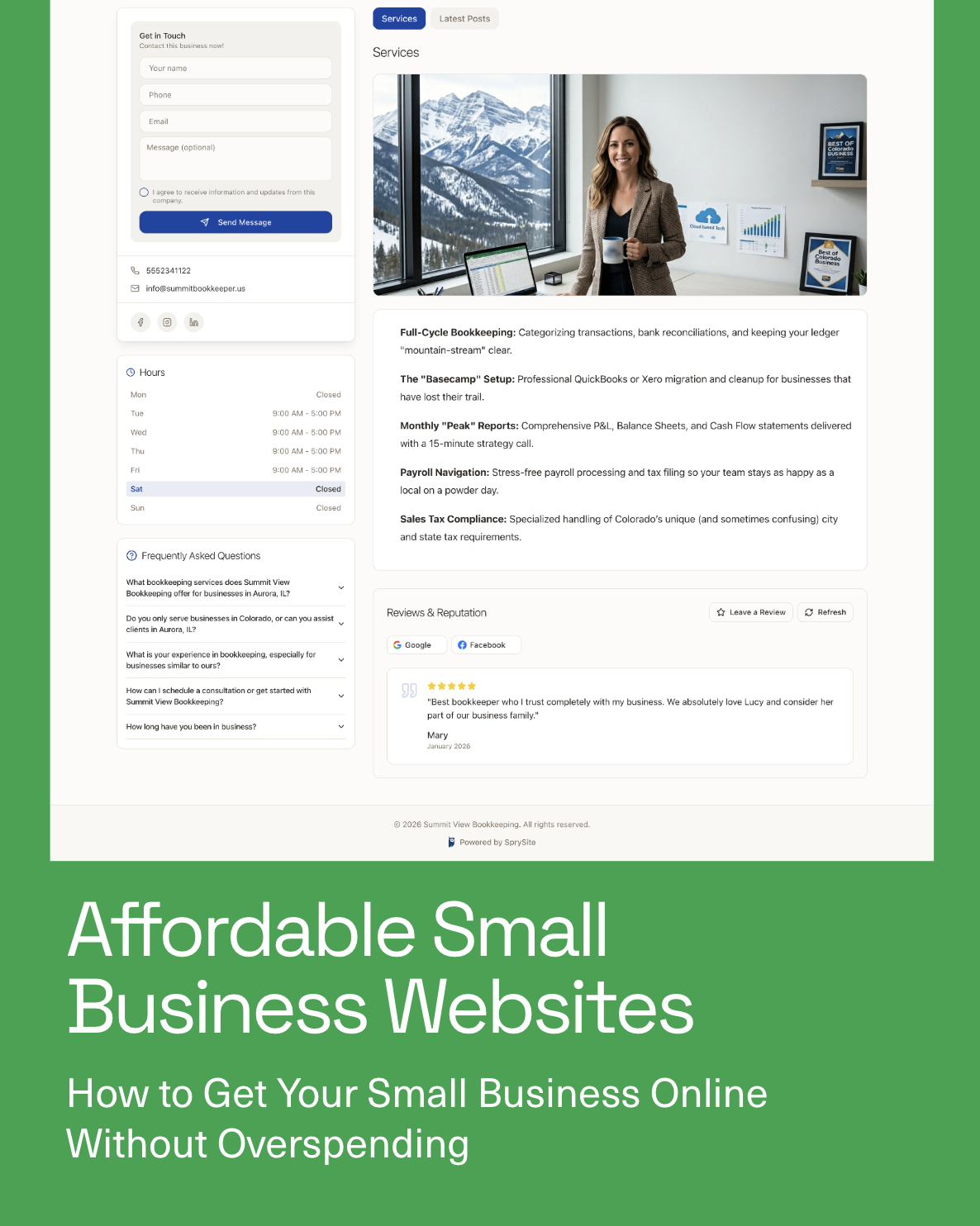
What "Affordable" Actually Means in 2026
Affordable doesn't mean cheap, and it definitely doesn't mean free. A truly affordable small business website is one that pays for itself — through new customers, phone calls, bookings, and reviews — within the first month or two of being live.
For most local businesses, that pricing sweet spot lives between $15 and $30 per month. Anything below that usually means hidden ads, missing features, or a platform that won't help you rank on Google. Anything significantly above it usually means you're paying for features a small business doesn't need.
The Five Things Every Affordable Small Business Website Needs
Price matters, but only if the product actually delivers. Before you commit to any platform, make sure your website includes these essentials:
1. Mobile-first design. More than 60% of local searches happen on a phone. If your site doesn't load fast and look great on mobile, you're losing customers before they even read a sentence.
2. Built-in SEO. Title tags, meta descriptions, structured data, sitemaps, and fast page speeds should all be handled automatically. You shouldn't need a developer to rank on Google.
3. A real content engine. A static one-page website won't grow. Look for a platform that includes a blog or post system so you can publish updates, answer common questions, and build search authority over time.
4. Lead capture and CRM tools. Contact forms, email subscribers, and a simple way to track inquiries turn visitors into actual customers. Without this, your site is a brochure — not a business asset.
5. Reviews and social proof. Google ratings, testimonials, and review requests should be built in. Trust is what converts a click into a customer.
How to Compare Affordable Website Platforms
When you're comparing options, ignore the homepage marketing and look at these four things:
Total monthly cost. Watch for "starting at" pricing that jumps once you add a domain, remove ads, or unlock SEO. The advertised price is rarely the real price.
What's included by default. Hosting, SSL, custom domain support, blog tools, contact forms, analytics, and review widgets should all be standard — not paid add-ons.
Time to launch. An affordable website should be live in a day, not a month. If a platform requires hours of tutorials before you can publish, the price tag is misleading.
SEO out of the box. Ask one simple question: will Google find this site without me hiring an expert? If the answer isn't a confident yes, keep looking.
Why Local Businesses Are Choosing All-in-One Platforms
Five years ago, building a small business website meant buying hosting from one company, a domain from another, a theme from a third, and stitching it all together with plugins. That's how websites got expensive — and how they broke.
Today, modern all-in-one platforms bundle everything into a single subscription: hosting, design, SEO, blogging, lead capture, and reviews. The result is an affordable small business website that actually performs, without the technical headache.
SprySite was built around this exact idea. One flat price, every feature included, and a real path to ranking on Google — without the agency invoice.
Frequently Asked Questions
Q: What is a fair price for a small business website?
For most local businesses, $15–$30 per month is the sweet spot. That covers hosting, a custom domain, SEO tools, and lead capture — everything you need to compete locally without paying agency rates.
Q: Are free small business websites actually free?
Rarely. Free plans typically include third-party branding, block custom domains, and remove the SEO features you need to be found on Google. You usually pay with visibility instead of dollars.
Q: How long does it take to launch an affordable website?
With a modern all-in-one platform, you can be live in under a day. Most of the work is gathering your business info, photos, and a short bio — the platform handles the rest.
Q: Can an affordable website still rank on Google?
Yes — and often better than expensive custom builds. Ranking comes from clean code, fast load times, structured data, and consistent content. A good platform handles all four automatically.
Q: What should I avoid when choosing a cheap website builder?
Avoid platforms that charge extra for SEO, force their branding on your site, or limit how many pages or posts you can publish. These restrictions almost always cost more than just paying for a real plan.
Ready to launch an affordable small business website that actually works for you? Get started with SprySite for one flat monthly price and everything your business needs to grow online.